
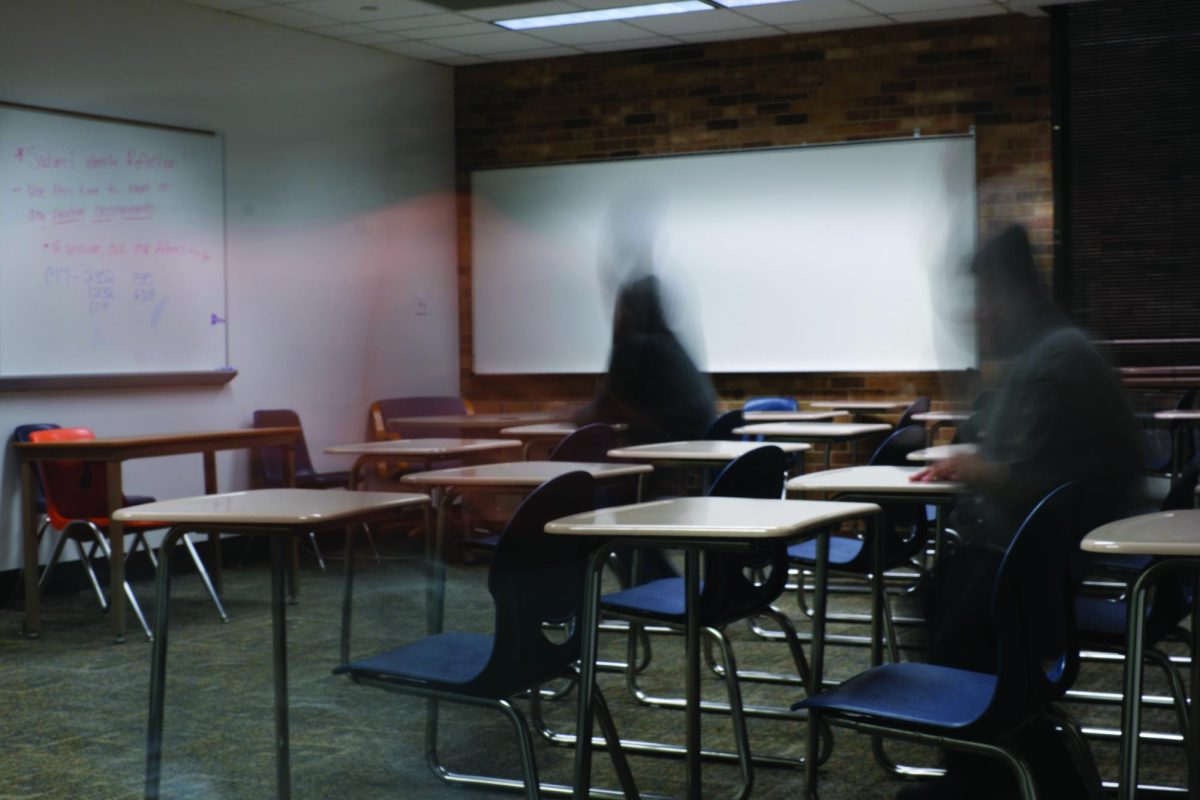
Amid the COVID-19 pandemic, colleges across the U.S. pivoted to online learning. This shift has opened the door for scammers to haunt universities and students alike. According to ABC News, administrators of community colleges across the country are characterizing ghost students as a crisis.
Ghost students is a term that describes fake students who enroll in college classes and apply for student loans and financial aid, but show up to class rarely, if at all. These ghost students are using stolen and fake identities to steal money from schools, financial aid programs and even the victims of identity theft.
The origins of the term can be traced back to the 2019 NPR article “Oklahoma Officials: Impossible To Track Epic Charter Schools’ Alleged ‘Ghost Students,’”which reported that Epic Charter Schools in Oklahoma City was allegedly embezzling money by artificially inflating enrollment numbers.
Based on recent federal government investigations, over $350 million have been stolen by these scammers in the ghost student epidemic within the last five years. The debt accrued through this scam is then placed on innocent parties who have no knowledge of the loans taken out in their name.
Jason Williams, the assistant inspector general for investigation services in the Office of Inspector General for the U.S. Department of Education, told ABC News that there may be more funds being stolen by scammers. “There is a lot of stuff out there that we don’t know,” Williams said. This issue is predominantly present in community colleges due to the simple admission requirements and high acceptance rates, which allow scammers to infiltrate the schools with greater success. Williams has talked about fraudsters trying to steal student financial aid for decades, but the online shift after the pandemic created a new avenue for scammers to abuse and steal student funds.

In recent investigations regarding California community colleges, 34% of applicants for 2025 were suspected to be ghost students, an 11% increase since January 2024 investigations.
Anonymous comments have been made to The Courier by Dallas College faculty regarding students that continuously enroll in their courses and do not attend or communicate at all. This could fall under the profile of a ghost student.
Dallas College admissions staff did not reply to inquiries if they are aware of the issue at the college.
Ghost students are not just affecting prospective students. Any victim in the unlucky roulette of identity theft can be susceptible, despite not being enrolled in higher education. Schools are having to expend extra time, money and resources trying to combat the fraud, redirecting effort away from other demands.
In an attempt to combat the ghost student plague, last year the Trump Administration created new identity verification requirements for schools. According to experts, this has helped slow down the issue, however private identity verification software companies are consistently receiving more business from community colleges for added protective measures.
Despite an effort being put into solving the crisis, students are still losing aid and placements in class. Innocent families are being financially ruined by identity theft.