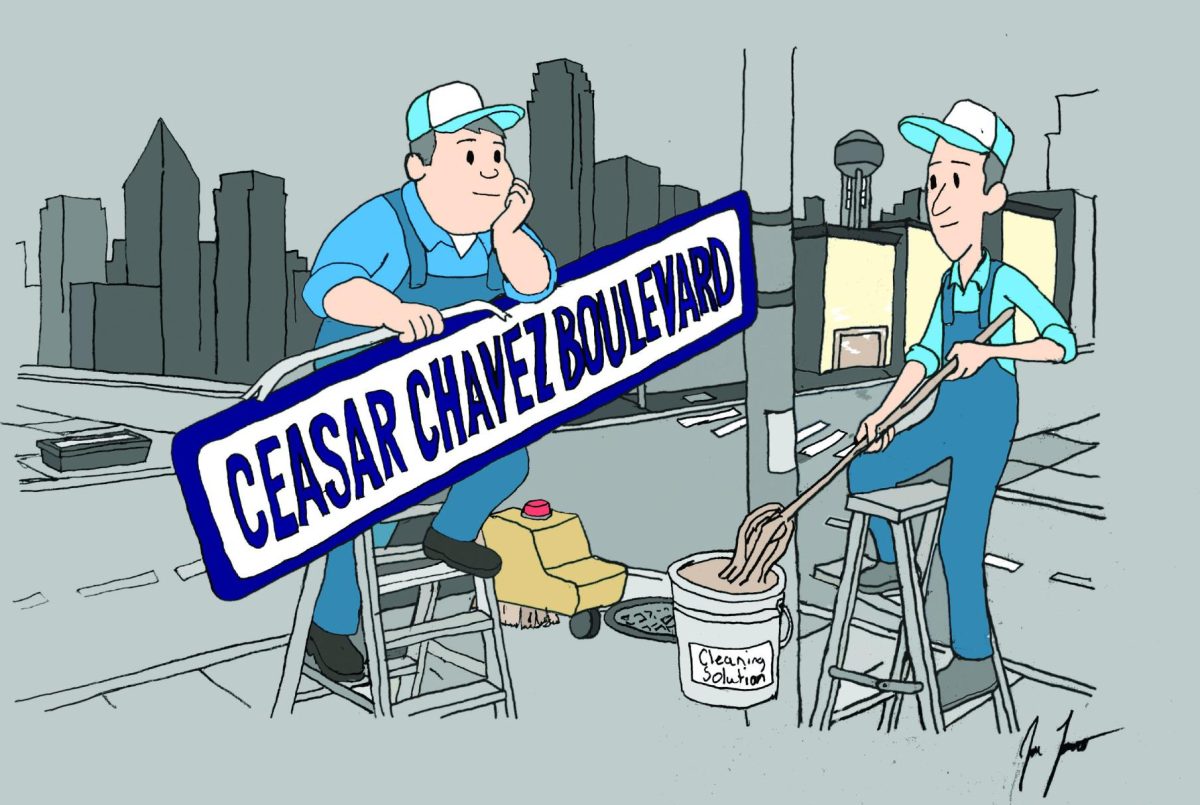
Dallas, like other large cities in America, is currently a stage for the battle between memory and accountability. The city seems to be moving toward the removal of Cesar Chavez Boulevard signs after disturbing allegations involving the grooming and abuse of girls as young as 13 who worked within the movement.
The immediate gut response is to purge the name of the disgraced from history. However, this moment demands a more uncomfortable conversation.
If we are applying a stringent moral lens to civil rights icons, is there anyone else who deserves scrutiny?
The dispute against Chavez is not about policy for the Dallas City Council members, but rather the breach of character that was immortalized at a fundamental level.
The March report detailing the alleged sexual abuse of minors has disfigured his name from the symbol of labor dignity for Latinos into a source of great pain. The understanding is that the removal of the street signs is a retroactive civic cleansing – an all-out rejection to obligating pedestrians the indignity of traversing under the street sign named after an individual with these allegations.
When the first sign is lowered, the momentum of moral reevaluation becomes inescapable. When we remove Chavez for his alleged moral failings, we should turn our attention to one of the most sacrosanct names in the American pantheon: the Rev. Martin Luther King Jr.
To even suggest reevaluating King and his contribution to America may seem like heresy to some, but the facts of his life present a challenging juxtaposition.
In a report released by the Boston University committee, it was confirmed as a matter of academic record that King’s doctoral thesis had significant portions plagiarized. If he were looked at as any other person, such a breach of intellectual honesty would require stripping him of his credentials.
According to King’s writings from his time at Crozer Theological Seminary, his views on theology call into question the resurrection and reject the deity of Christ. This contrasts with the traditional Christian tenets he attempted to represent to the outside world.
In a letter he wrote to Coretta Scott in 1952, King shows a pivot toward democratic socialism and strong ideas regarding radical wealth distribution, which was at odds with a nation built on a capitalist foundation.
King was not without alleged scandals himself. According to Tony Allen Mills’ The Times article “FBI tapes reveal Martin Luther King’s affairs ‘with over 40 women,’” FBI tapes revealed he allegedly had affairs with as much as 40 women. These files also claim he allegedly “looked on and laughed” as a friend and fellow pastor sexually assaulted a member of the congregation in a hotel room.
All of this being stated, can it be surmised that we as a people need to begin drafting the memos needed to rename everything touched with the name King across the country?
The Dallas City Council’s decision runs dangerously close to being inconsistent. Removing Chavez for his alleged personal sin yet retaining King despite his academic, theological and sexual dishonesty, would seem as if we were only practicing justice through purposeful curation. We are selecting which flaws we are comfortable living with and willing to forgive based on how much we like the crafted persona and how they are portrayed in popular media.
We cannot change history but maybe the solution is changing how we honor it. Historical figures are not secular saints and we should stop viewing them as such. Instead, we should start viewing them as flawed instruments to push forward an agenda. Whether it be civil rights or labor dignity, King and Chavez were vital forces for farm workers and minority rights.
Dallas will move forward with the removal of Chavez’s name.
The nature of these horrendous allegations strike directly at the heart of Americans.
As those signs come down, we must resist our need to fill the void with the next “perfect” replacement. Our icons are human.