Media serves as an outlet for the author; it either involves fragments of their political or religious views. In most instances, can illustrate the artists’ controversial thoughts.
Writer Garth Ennis is known for his work on the Vertigo series of DC Comics, where he covered grotesque topics that would not be appropriate for younger audiences.
Ennis, through DC Vertigo, tackled the polarizing topic of Christianity via satire. He created a story about a Texan preacher who can control anyone through God. Within the comic Christian mythology is played around with while also depicting characters like Jesus as reckless.
Preacher later received a live action adaptation in 2016 which was not received well by a select group of Christians. The story mocks the religion with the inclusion of a messiah, known as “Humperdoo,” who was presented as a low intelligence individual with crossed eyes and loose teeth who coincidentally had physical features similar to Jesus Christ.
Ennis has opened up about how he feels about Christianity and his reoccurring theme of religious blasphemy transcends in more of his work, especially in the graphic novel “True Faith,” where the main character grows obsessed with the idea of taking God down.
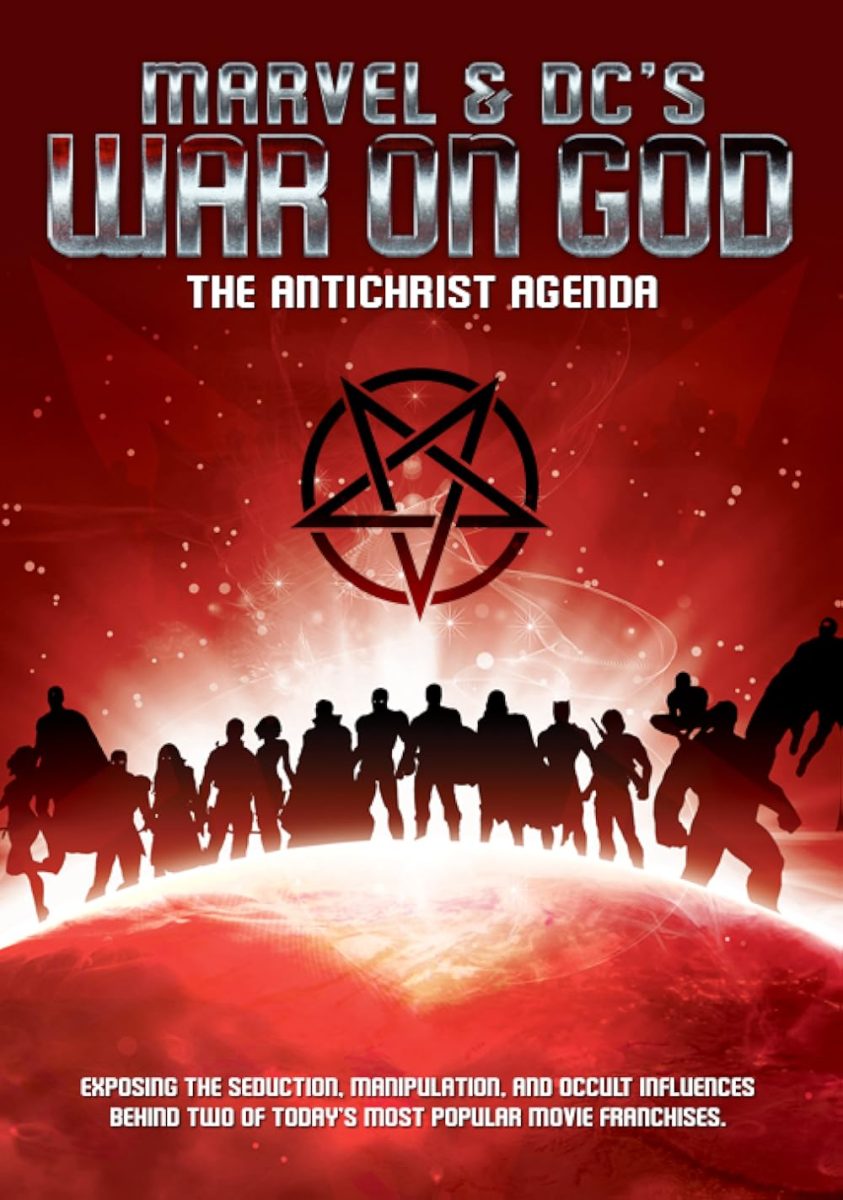
Stories like “True Faith” have unsettled many Christians to the point that Joel Schimmel, a follower of Christ, created a documentary in 2022 titled “Marvel and DC’s War on God: The Antichrist Agenda.” Not only does this documentary mention Ennis and his work, but a lot of the claims made throughout are about how Christians view superheroes and believe that the films and characters are indoctrinating children into being satanic.
Schimmel mentioned how none of the characters within the Marvel Cinematic Universe pray to God and finds his absence blasphemous. To back up this stance, Schimmel references Aunt May’s prayer from director Sam Rami’s 2002 “Spider-Man” and how she is unable to receive safety during her encounter with the Green Goblin who stops her mid-prayer.
The documentary goes as far as highlighting Thanos from “Avengers: Infinity War” as an allegory to an all-knowing God who seeks to cleanse the universe. This contrasts with his character in the universe of the movie, where he is responsible for eliminating half of the population.
Another character whose actions are overlooked due to their appearance is Venom. In the 2018 film “Venom,” he eats a man who attempts to steal from a convenience store clerk. The method is extreme and graphic, but this interpretation of Venom showcases him as an anti-hero.
Christians who side with Schimmel aren’t buying into the superhero identity of good doing as it seems that the morals of each character are cast aside by theories of actors selling their souls. Therefore, taking offense towards the comic industry while also overlooking their representation.
“Our ability to understand God’s purpose is limited. But we take comfort in the fact that His love is limitless,” This quote was delivered by Nightcrawler, a demonic-looking X-Men member with teleportation abilities, in the 90’s cartoon “X-Men the Animated Series.” In contrast to his appearance, Nightcrawler is known for being a devout Christian. This plays into his character, as he leans on his faith to combat facing prejudice for his looks.
Despite the clash between religion and comics, heroes come in all shapes and sizes. Marvel’s Daredevil is Catholic and Azreal from DC Comics was created in the story by the Catholic order of St. Dumas. Amen to that.